In today’s Gospel reading we find the devil pressing his elbow deep into the wounds of humanity – wounds carried in Jesus’ mind and body just as much as in any of our minds and bodies, because he was just as human as we are. Wounds that we all share – wounds around being denied what we need, being misunderstood, and being limited and frustrated in the good we wish to do.
Rev Pam Hynd's sermon for The Transfiguration
In a world that is headed in the direction of corruption and decay… in a world where people with wealth and power are accumulating more and more wealth and power, without scrutiny, at the expense of people who have little and are in danger is losing what they have… in a world where some people – like the Herod dynasty for example - are using religion to justify their tyranny… Jesus calls his followers to be a bubble of healthy hope where people act with integrity and respect, even when it costs them.
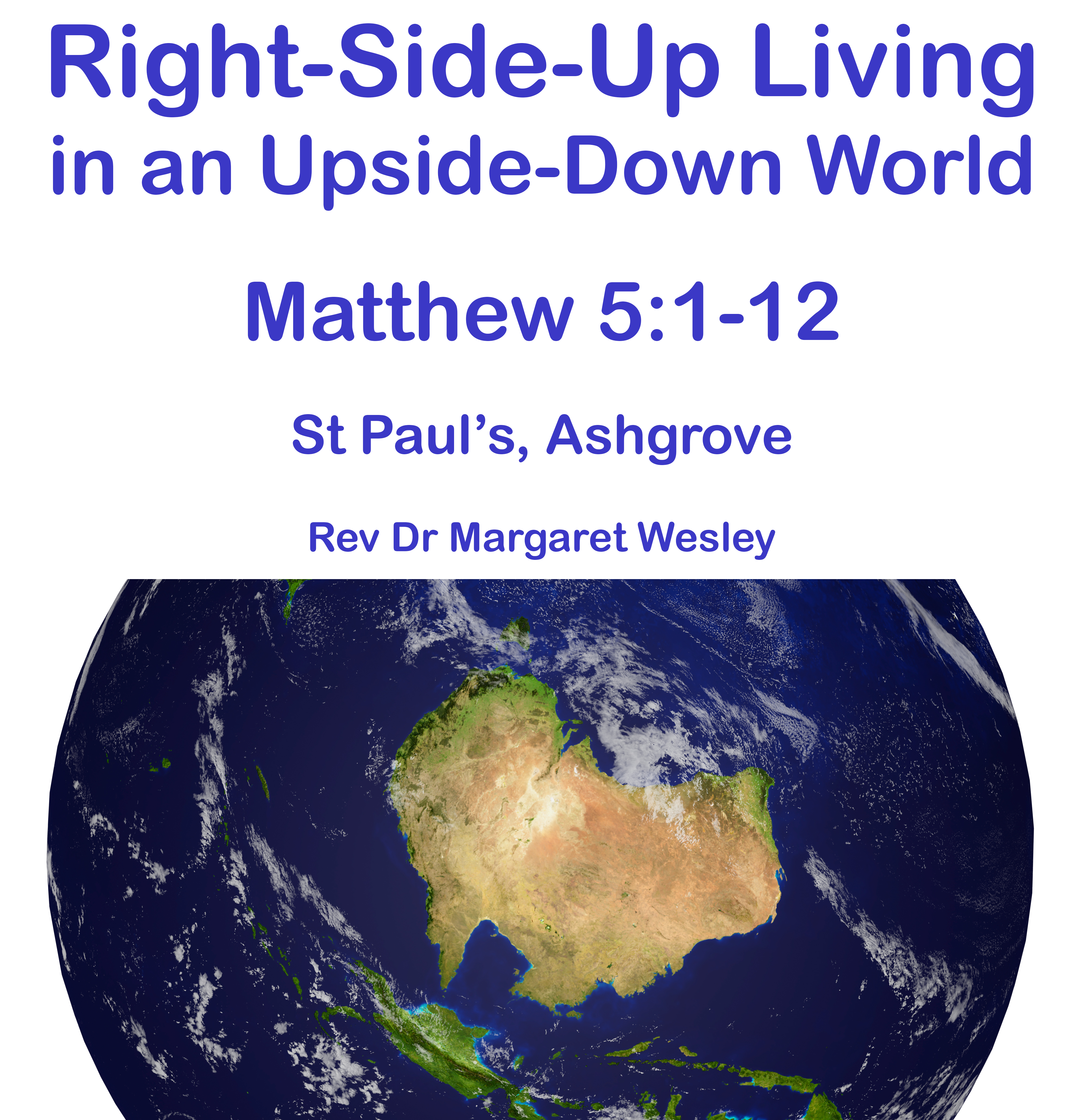
We live in an upside-down world, in broken systems where expediency, politics and competition are the order of the day. How sad for those who embrace those things! Wouldn’t it be awful to be someone who benefits from systems that dehumanise, deceive, defame, and distort! What a blessing it is to be someone who cannot succeed in such systems but who works for beautiful alternatives that foster life, hope, and peace!
In a sermon on Loving Your Enemies, Martin Luther King preached these words: "Why should we love our enemies? The first reason is fairly obvious. Returning hate for hate multiplies hate, adding deeper darkness to a night already devoid of stars. Darkness cannot drive out darkness; only light can do that. Hate cannot drive out hate; only love can do that. Hate multiplies hate, violence multiplies violence, and toughness multiplies toughness in a descending spiral of destruction. So when Jesus says “Love your enemies,” he is setting forth a profound and ultimately inescapable admonition. Have we not come to such an impasse in the modern world that we must love our enemies—or else? The chain reaction of evil—hate begetting hate, wars producing more wars—must be broken, or we shall be plunged into the dark abyss of annihilation."
“What are you looking for?” Those are the first words spoken by Jesus in the Gospel of John. And across the centuries Jesus keeps asking us that same question. And it is a good question to ask ourselves at the start of the year. What are we looking for?

Our search for the truth will sometimes bring us to a manger, sometimes to a river, sometimes to a cross. But in every case, we have reached the right place because Jesus is in all those places. Jesus is there in our suffering and in our transitions, in our times of refreshing and our new beginnings. The question is, are we still searching? Are we still following stars? Or have we settled for the destination we reached last year or ten years ago?
Rev Pam Hynd's sermon for the first Sunday after Christmas
(apologies for the audio glitches)
I wonder Who’s your favourite character in the Christmas story? And before you all say baby Jesus, I’ll rephrase the question: Who’s your favourite character in the Christmas story apart from baby Jesus? Theres one character who always makes me smile. They all make me smile, really, But there’s one part in particular who I find mysterious and intriguing Exotic and, frankly a bit random.
One of the most important questions for us to be asking after the Bindi Beach attack is, “How can we show our love to a community that has been so traumatised?” What can we do that can possibly make a difference?