Rev Pam Hynd's sermon for the first Sunday after Christmas
(apologies for the audio glitches)
I wonder Who’s your favourite character in the Christmas story? And before you all say baby Jesus, I’ll rephrase the question: Who’s your favourite character in the Christmas story apart from baby Jesus? Theres one character who always makes me smile. They all make me smile, really, But there’s one part in particular who I find mysterious and intriguing Exotic and, frankly a bit random.
One of the most important questions for us to be asking after the Bindi Beach attack is, “How can we show our love to a community that has been so traumatised?” What can we do that can possibly make a difference?
I love the slogan: “If we want singing and dancing after the revolution then we must have singing and dancing during the revolution.” I love it because the same applies to the Kindom of God. The Christian life is not about gritting our teeth and deferring all joy into the indefinite future. It is about bringing that future into the present and living in the joy of it now. If we don’t practice the joy of God’s Kindom now, we will not be fit to enjoy it when it fully arrives. If we want singing and dancing in Heaven, then we must have singing and dancing now!
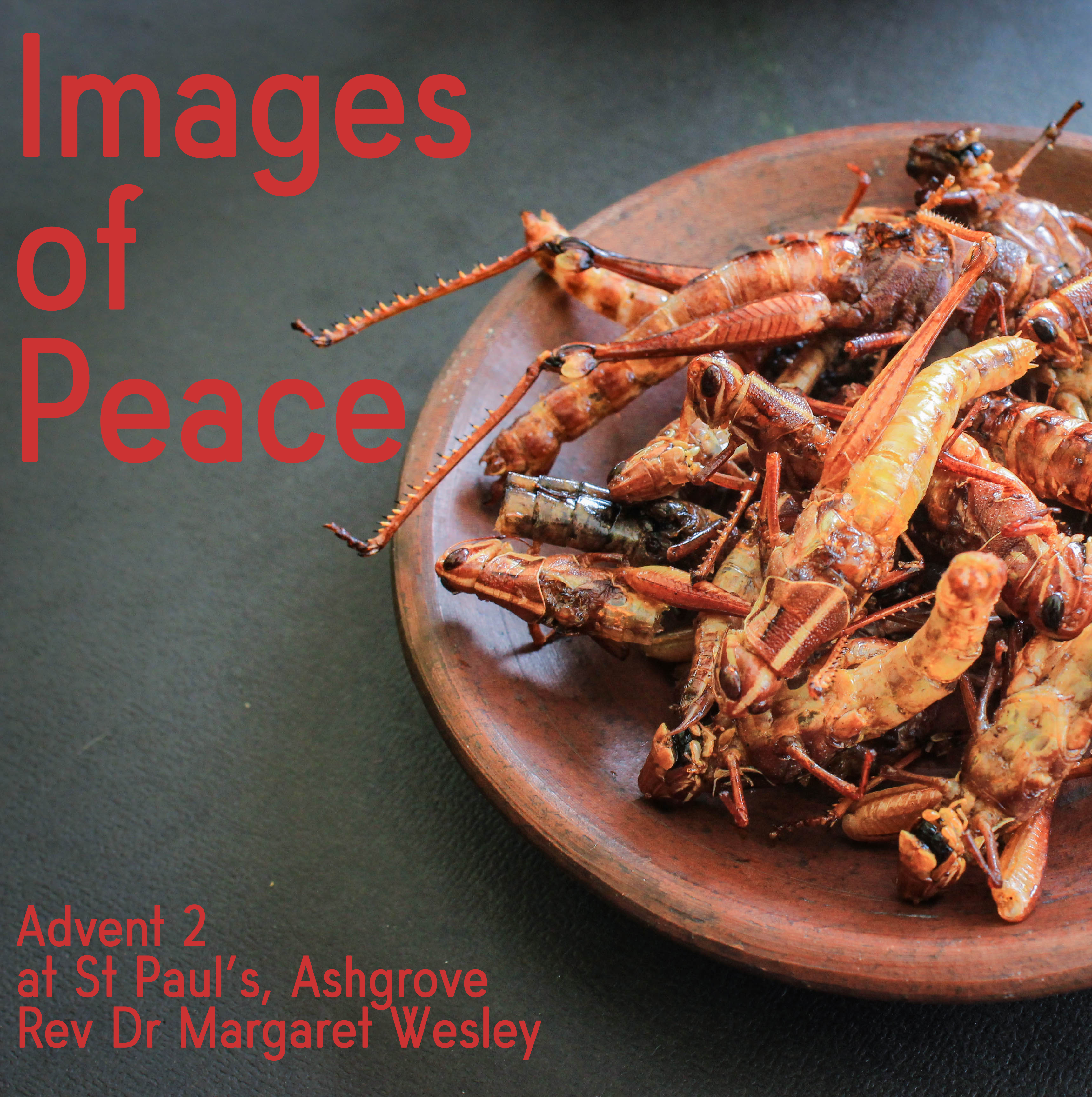
We look at the idyllic world of the Isaiah fragments: so disturbing because of how far away the longings of our hearts are from the realities of our lives. We could harden our hearts with cynicism and say such a vision could never be. OR we can eat locusts! We can strengthen our resolve to be fierce and prophetic like John the Baptist – eating our fear and growing stronger in our opposition to violence.
Rev Pam Hynd's sermon for Advent 1
Rev Pam Hynd's sermon for Christ The King
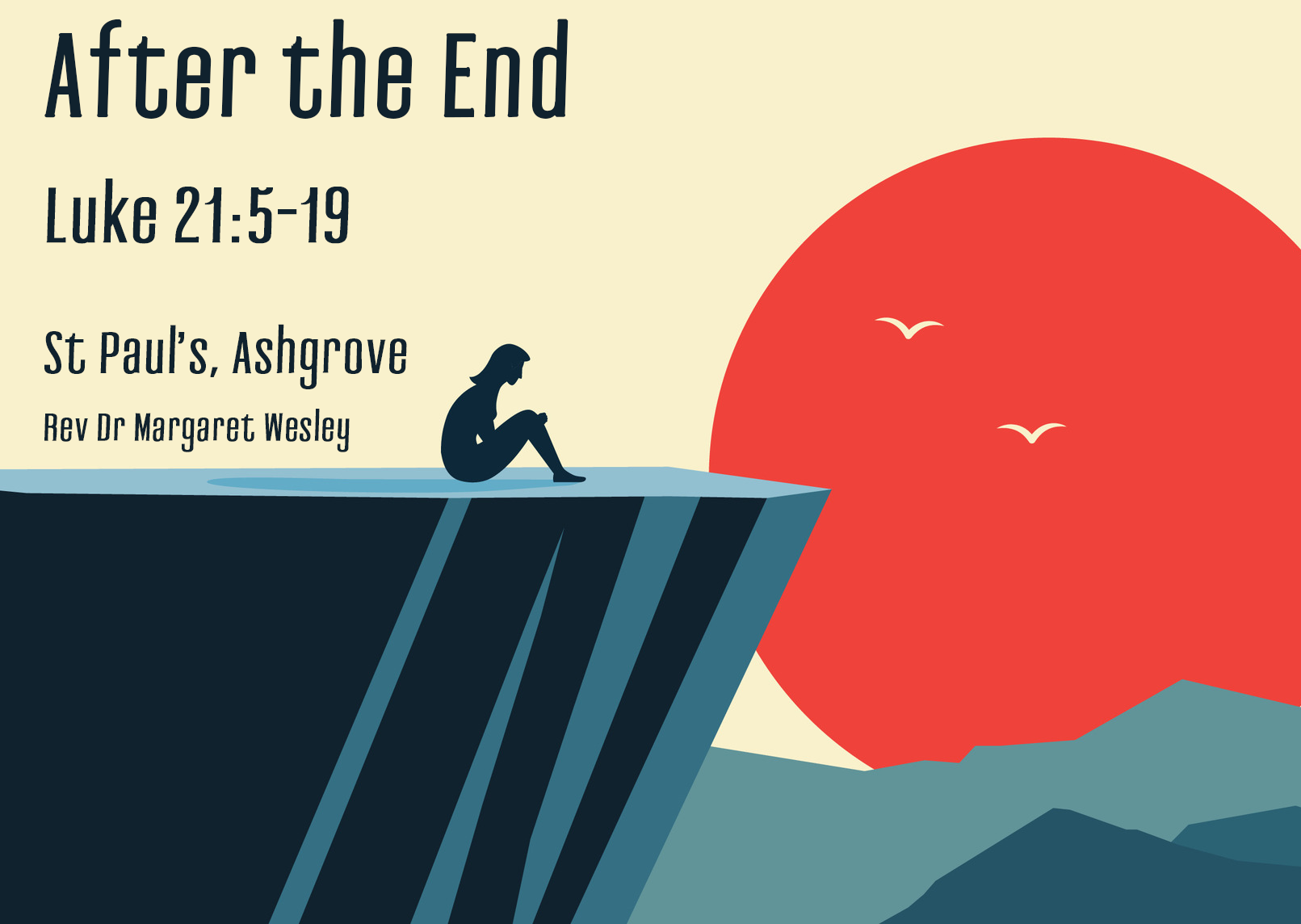
This is what happens when people groups are displaced: Sacred places are desecrated Authority structures are undermined Ownership rights are ignored Alliances are broken And lives are destroyed. This is a picture of the attempted annihilation of the very identity of a people group. When Christians read Jesus’ words now, we think it looks like a prediction of the end of the world. And to the people who lived through it, that is exactly what it would have felt like. It was the end of their world. And it has happened again and again and again through history.
We all tend to project our faulty thinking into eternity, and to assume, like the Sadducees, that the unjust structures that currently benefit us will continue to benefit us forever. It can be hard to look forward to God gently lifting the burden of our unjust privilege from our shoulders so that all will be equally free and equally blessed in the resurrection. But Jesus insisted – many times – that the first will be last and the last will be first. It will be unspeakable joy for us to see all the people who currently seem to be behind us and below us streaming into resurrection light ahead of us. It will be unspeakable joy because that broken place in our heart that needs to be first will have been healed.
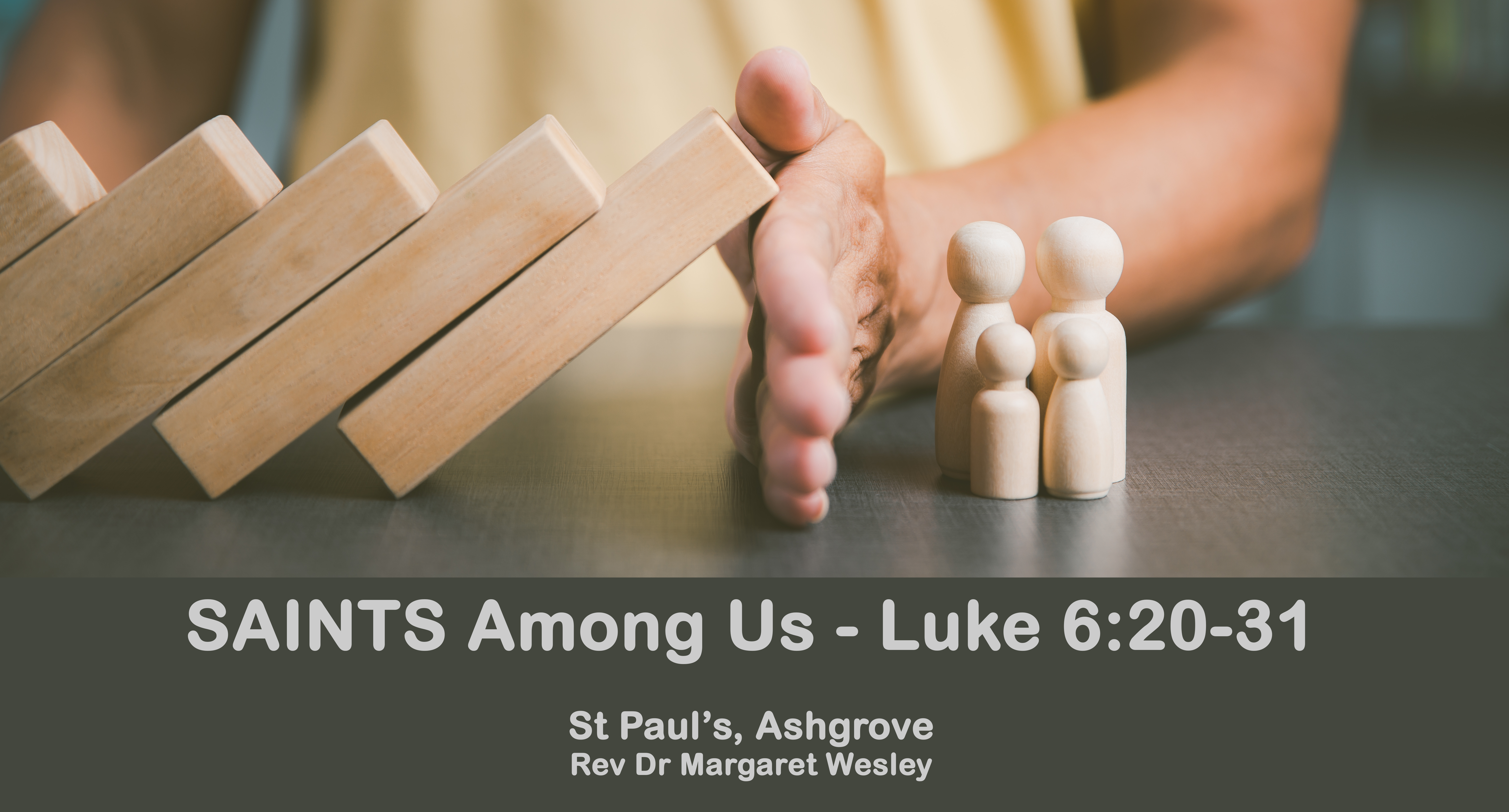
If saints are a teeny tiny percentage of specially sanctified individuals, then they are so far beyond our reach that there is no point even trying to follow their example. On the other hand, if every Christian is a saint, then we are already there and have nothing to strive for. But somewhere between those positions, it makes sense to remember people who lived and died, in relative obscurity perhaps, but who were so courageously faithful that they left us an example of behaviour we consider saintly – sufficiently inspiring to encourage us to do better, but not so far beyond our reach that we give up. I’m sure you have known people like that. Perhaps you are holding them in your heart today.